
10 Landmarks That Tell the Story of Romania's History
Romania's history is a tapestry woven from Dacian roots, Roman conquest, medieval kingdoms, Ottoman influence, and communist rule. To truly understand this complex narrative, exploring the principal istorie romania obiective is essential. These 10 landmarks aren't just tourist attractions—they're chapters in the story of a nation. Whether you're a history buff or a curious traveler, this guide to Romania's historical landmarks will help you trace the country's evolution from ancient times to the modern era.
Istorie Romania Obiective: Sarmizegetusa si Mostenirea Dacica
Perched atop the Orăștie Mountains at an elevation of 1,200 meters, Sarmizegetusa Regia was the capital of the Dacian kingdom and a symbol of resistance against Roman expansion. Built in the 1st century BCE, this fortress complex spans over 3 hectares and includes sanctuaries, temples, and a sophisticated water supply system using ceramic pipes. The Dacians, known for their fierce independence, held off the Romans until Emperor Trajan's conquest in 106 CE after two bloody wars. Today, the site is a UNESCO World Heritage site and offers a glimpse into pre-Roman civilization.
What to See and Do
The circular sanctuary, a unique stone calendar with 11 stone pillars, is the centerpiece. You'll also see the paved roads, the defensive walls built in the 'murus Dacicus' style, and remnants of metal workshops. Don't miss the nearby Sarmizegetusa Ulpia Traiana, the Roman capital built after the conquest, which contrasts the two eras with its forum and amphitheater.
Practical Tips
The site is remote—rent a car or join a tour from Orăștie (about 30 km away). Wear sturdy shoes for the uneven terrain; the hike up takes about 20 minutes. Allow at least 2-3 hours to explore. Best visited from May to September; winter snow can close access.
Istorie Romania Obiective: Transilvania Medievala si Castelul Bran
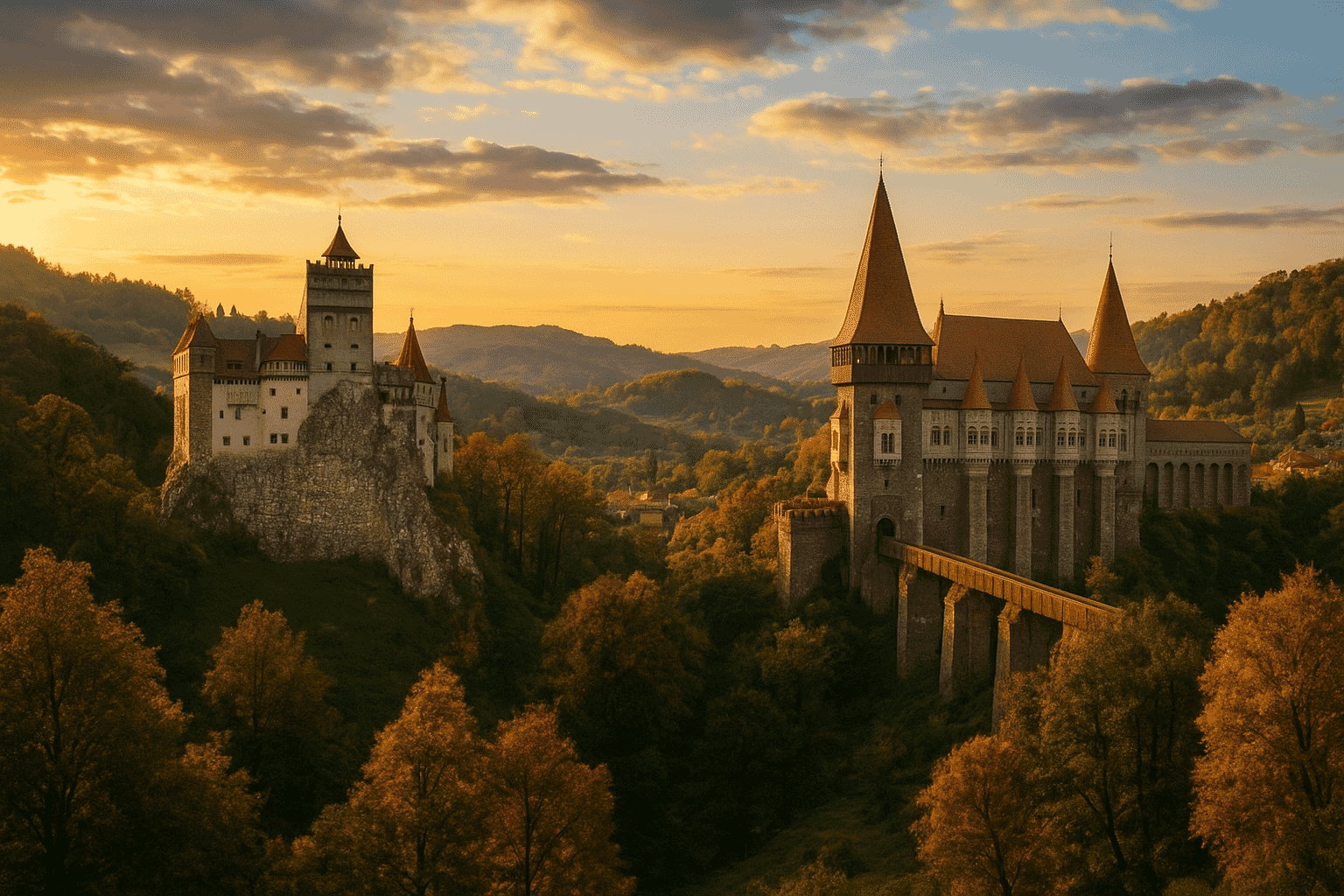
Transylvania's medieval castles are world-famous, thanks in part to the Dracula legend. Bran Castle (often called Dracula's Castle) is a 14th-century fortress that protected the mountain pass between Transylvania and Wallachia. While Vlad Țepeș, the real-life inspiration for Dracula, likely never lived there, the castle's dramatic appearance and mythic connections draw over 600,000 visitors annually. For a deeper dive into the history versus legend, check out our guide to Castelul Bran: History vs Vampire Myth. Nearby, Corvin Castle in Hunedoara is a Gothic masterpiece with towers, drawbridges, and a rich history as a stronghold of Hungarian nobility—including a 47-meter-deep well and a bear pit. See more top castles in our Top 10 Castele Romania guide.
Bran vs. Corvin: A Comparison
Bran is more touristy and compact, with a souvenir market and a brief tour. Corvin feels authentic and haunting, with multiple levels, a chapel, and a torture chamber. Both are must-visits, but Corvin offers a more immersive medieval experience. Allow 1 hour for Bran, 2 hours for Corvin.
Practical Tips
Visit Bran early morning (before 10 AM) to avoid crowds. For Corvin, book a guided tour to access hidden chambers and hear legends. Both sites are open year-round, but winter can be chilly. Combine with a stop in Brașov or Sibiu.
Saxon Heritage: Sibiu and the Fortified Churches
Transylvania's Saxon settlers arrived in the 12th century, building fortified churches and towns to defend against Ottoman raids. Sibiu (Hermannstadt) is a gem with three cobbled squares, pastel-colored houses, and the Brukenthal Museum—one of Eastern Europe's oldest, housing over 50,000 items. The Biertan Fortified Church, a UNESCO site, features a massive three-ring defensive wall and a beautiful triptych altar. The church's original door lock (a 15th-century marvel) has been used continuously. These sites exemplify the Saxon blend of Germanic architecture and local traditions. For a full Transylvania itinerary, see our Vacanta Transilvania guide.
Why Visit
Sibiu's Old Town is pedestrian-friendly, with cafes and history at every corner. Biertan's church offers stunning rural views and a glimpse into community life. Other notable fortified churches include Viscri and Prejmer. Allow a full day for Sibiu, half a day for Biertan.
Practical Tips
In Sibiu, take a guided walking tour to hear stories of the guilds. For Biertan, drive via Sighișoara for a scenic route. Entry fees are around 5-10 lei.
Royal Grandeur: Peleș Castle
Perched in the Carpathian mountains of Sinaia at 800 meters elevation, Peleș Castle was commissioned by King Carol I in 1873 as a summer retreat. Completed in 1914, it blends neo-Renaissance, Gothic, and Baroque styles, with 160 rooms and a 66-meter central tower. The interior is a treasure trove of art, including stained glass by Bavarian artists and a 1,500-piece weaponry collection. Unlike other castles, Peleș was a royal residence, not a fortress, and its opulence reflects the country's aspirations after independence from the Ottoman Empire.
Must-See Areas
The marble staircases, the Hall of Mirrors, the Imperial Suite, and the armory. Tours run every 30 minutes; book online for English-language slots. The grounds include a park and the smaller Pelișor Castle.
Practical Tips
Peleș is a 2-hour drive from Bucharest or a train to Sinaia. Arrive early to avoid queues. Photography inside is allowed without flash. Dress conservatively; no large bags.
Moldavian Art: The Painted Monasteries
In northern Moldavia, a group of seven monasteries with exterior frescoes from the 15th–16th centuries forms a unique artistic heritage. Voroneț Monastery (the "Sistine Chapel of the East") is famous for its vibrant "Voroneț blue" hue—a mineral-derived pigment that remains bright 500 years later. Others like Sucevița (with a closed porch and 22 scenes) and Moldovița (depicting the siege of Constantinople) cover around 600 square meters of painting each. These paintings served as visual Bibles for illiterate villagers and withstood centuries of weather. For a complete guide, visit our Manastiri Bucovina Ghid Complet.
When to Go
Late spring (May-June) or early autumn (September-October) for best light and fewer crowds. A full-day drive from Suceava (the nearest city) can cover three to four monasteries. Allow 30-45 minutes per site. Entry fees are around 10-15 lei each.
Practical Tips
Hire a car or join a tour from Suceava (the nearest city). Dress modestly (covered shoulders and knees). No photography inside the churches. Avoid Sundays when services are held.
Rural Traditions: Wooden Churches and the Merry Cemetery
Maramureș, in northern Romania, is home to eight UNESCO-listed wooden churches built between the 17th and 19th centuries. Their tall spires (up to 72 meters at Bârsana) and traditional motifs represent rural Orthodox spirituality. These churches were built without nails, using interlocking beams. Meanwhile, the Merry Cemetery in Săpânța offers a quirky take on death—each of the 800+ tombstones is carved with a humorous poem and colorful scene depicting the deceased's life. The tradition started in the 1930s by local artist Stan Ioan Pătraș, who carved the first epitaphs. It's a folk-art masterpiece that reflects local customs. Plan a trip with our Itinerar Maramures 5 Zile guide.
Travel Tips
These sites are spread across the Maramureș region; hire a local driver or join a tour from Baia Mare or Sighetu Marmației. Allow two full days to see the wooden churches and the cemetery. Respect dress codes in churches (covered shoulders/knees). Carry cash for donations (small coins).
Communist Architecture: The Palace of the Parliament
In Bucharest, the Palace of the Parliament stands as the world's heaviest building (4 million tons), second-largest administrative building (after the Pentagon), and a monument to Nicolae Ceaușescu's megalomania. Construction began in 1984, requiring the demolition of historic neighborhoods—over 40,000 people were displaced. The interior boasts 1,100 rooms, 4,500 chandeliers, and 480 chandeliers of crystal. The single largest room, the Union Hall, is 16 meters high and 200 square meters. Guided tours reveal the absurd scale and the regime's excess.
Booking Information
Tours are mandatory and available in multiple languages (daily 9:00-16:00). Book online at least a week ahead, especially in summer. Tickets cost 50-100 lei depending on the tour length. Allow 1.5 hours. Photography is allowed but no flash.
FAQ
What is the best way to visit Sarmizegetusa Regia?
Rent a car from Orăștie or join a guided tour. The site is well-signposted but remote. Wear sturdy shoes and bring water. Best from May to September.
Which Romanian castle is actually linked to Vlad Țepeș?
Vlad Țepeș likely had connections to Poenari Castle (a ruin in the mountains, 3 hours from Bucharest), not Bran. Bran's link is based on Bram Stoker's fiction.
Are the Painted Monasteries of Bucovina worth the detour?
Absolutely. They are unique in the world and best visited in good weather. Allow a full day for the circuit from Suceava. Dress modestly.
How much time should I spend in Bucharest for history?
At least 2 days: one for the Palace of Parliament and communist sites (like the Memorial of the Victims of Communism), another for the Old Town and museums (e.g., National Museum of Romanian History).
Can I visit the Palace of Parliament interior?
Yes, guided tours are available daily. Book online to secure a spot, especially in summer. The tour covers the main halls but not all 1,100 rooms.
What other historic towns in Transylvania are must-sees?
Sighișoara (birthplace of Vlad Țepeș, with a hilltop citadel), Brașov (Black Church and Council Square), and Cluj-Napoca (Matthias Corvinus's birthplace). Each offers unique Saxon architecture.