
Castelul Bran Dracula: Separating History from Vampire Legend
Castelul Bran Dracula: Separating History from Vampire Legend
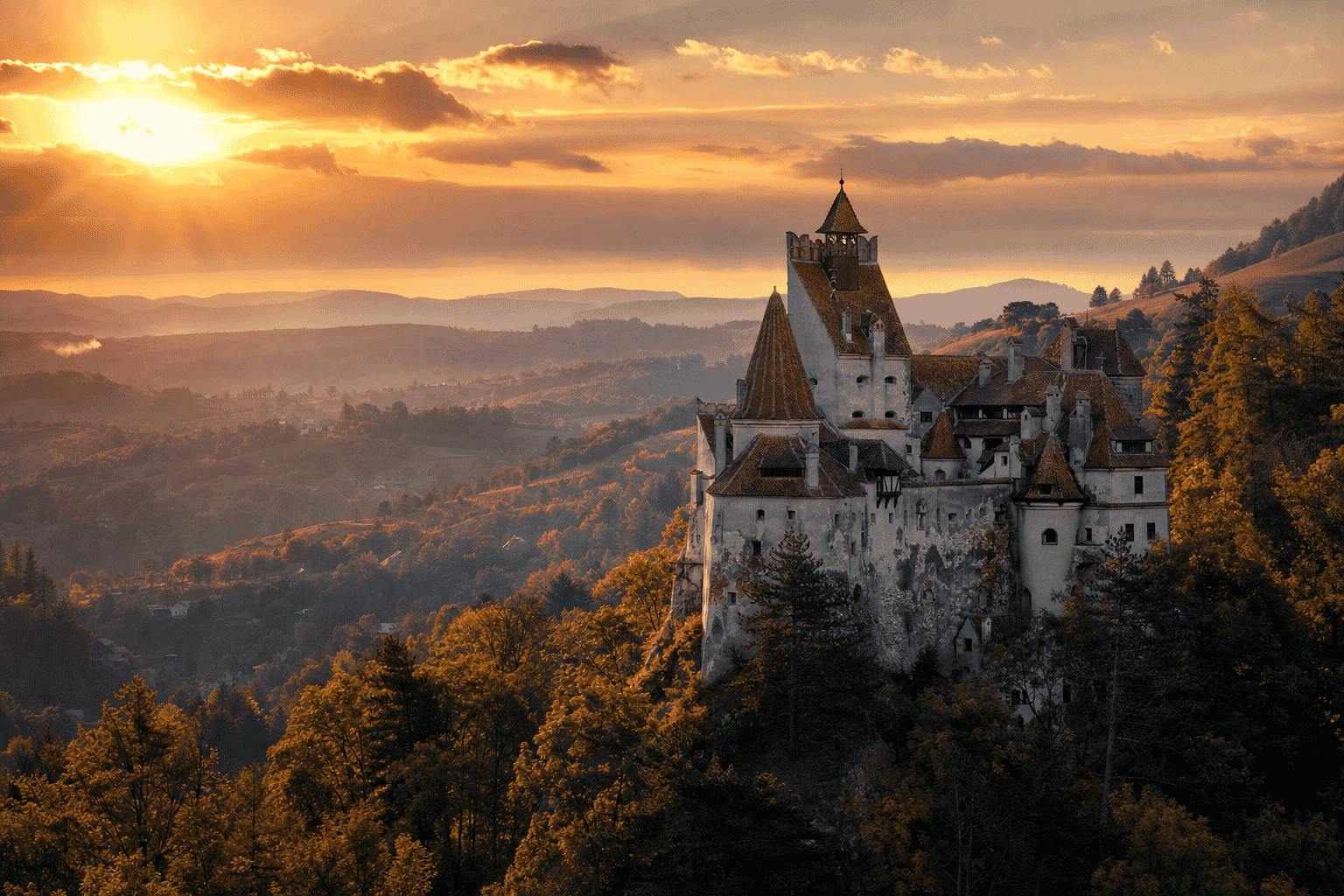
Perched dramatically on a rocky precipice in the Carpathian Mountains, Castelul Bran draws millions of visitors each year, all lured by the Castelul Bran Dracula connection. But is this medieval fortress really the home of the legendary vampire? The truth behind Castelul Bran Dracula is far more nuanced—and fascinating—than the tourist brochures suggest. While the castle has undeniable links to horror fiction, its authentic history as a Teutonic stronghold, royal residence, and symbol of Romanian heritage offers a story just as compelling as any vampire tale. In this article, we peel back the layers of myth to reveal the real Bran Castle.
The True History of Castelul Bran Dracula: From Teutonic Fortress to Royal Residence
Bran Castle’s story begins in the early 13th century, around 1212, when the Teutonic Knights constructed a wooden fortress at the site. Their mission was to defend the southeastern border of Transylvania against invasion from the east. However, the knights were expelled in 1225, and the stone castle we see today was built later, in 1377, under King Louis I of Hungary. The fortress was strategically positioned to control the mountain pass between Transylvania and Wallachia, making it a vital customs point and military outpost.
For centuries, Bran Castle served as a bulwark against the Ottoman Empire. Its thick walls, narrow windows, and imposing towers withstood numerous sieges. By the 15th century, it had become a key defensive structure, but it also hosted periods of peace. The castle changed hands multiple times, serving as a royal residence and a prison.
In 1920, the castle was gifted by the people of Brașov to Queen Marie of Romania as a token of gratitude for her role in unifying the country after World War I. Queen Marie fell in love with the romantic ruin and spent years restoring it, transforming it into a sumptuous summer residence. She added modern amenities, gardens, and a park, and furnished it with art and furniture collected from across Europe. Today, the museum inside Bran Castle features many of Queen Marie’s personal belongings, including her furniture, art, and photographs, offering a glimpse into royal life in the early 20th century.
After Queen Marie’s death in 1938, the castle passed to her daughter, Princess Ileana, and later was seized by the communist regime in 1948. It remained closed for decades until being returned to the royal heirs in 2006. Since then, it has operated as a museum and a major tourist attraction, drawing over 700,000 visitors annually.
Bran Castle vs. Poenari Castle: The Real Fortress of Vlad Țepeș
Many travelers seek the “true” castle of Dracula. While Bran is marketed as such, Vlad Țepeș’s actual stronghold was Poenari Castle, a crumbling citadel perched on a cliff in the Argeș Valley. Poenari was built by Vlad himself in the 15th century and served as his primary refuge during his reign. Unlike Bran, which he may have never entered, Poenari has a direct historical link: Vlad fortified it and used it as a base for his campaigns. Unfortunately, Poenari is less accessible and less preserved, but for history buffs, it offers a far more authentic connection to the Impaler.
Vlad Țepeș: The Real Dracula and His Tenuous Link to Bran
Vlad III, Prince of Wallachia, known as Vlad Țepeș (the Impaler) or Vlad Drăculea, is the historical figure who inspired Bram Stoker’s vampire. But what is his actual connection to Bran Castle? Contrary to popular belief, Vlad Țepeș likely never lived in Bran Castle. The strongest evidence suggests he may have been imprisoned there briefly—but even that is debated.
Historical records indicate that in 1462, after being captured by the Hungarians, Vlad was held captive for about 12 years, likely in the citadel at Visegrád (Hungary), not Bran. However, some 19th-century scholars claimed he was imprisoned at Bran. This unsubstantiated claim became part of local lore and later fueled the Castelul Bran Dracula myth.
Vlad’s reputation as a cruel ruler is well-documented: he impaled thousands of enemies, including Ottoman invaders and Wallachian nobles, to maintain order and deter invasion. This brutality earned him the posthumous nickname “the Impaler.” Yet his actions were not uncommon for the time; he was also celebrated for defending his territory and punishing corruption.
So why did Stoker choose Vlad as his inspiration? The author came across the name “Dracula” (meaning “son of the dragon”) in a history book and was captivated by its sinister sound. He knew nothing about the real Vlad beyond a few gruesome anecdotes, but that was enough to create a character. The link between Bran Castle and Vlad was largely fabricated by later tourism promoters, but it stuck.
Bram Stoker's Dracula: How a Novel Created a Global Legend
In 1897, Irish author Bram Stoker published Dracula, a novel that would forever change how the world perceived Transylvania and its castles. Stoker never set foot in Romania; he researched his setting from books in the British Library, borrowing descriptions from travelogues and illustrated works. One of his key sources was Transylvania: Its Products and Its People by Charles Boner, which featured engravings of Bran Castle. The castle’s dramatic silhouette, with its towers and turrets rising from a rocky hill, perfectly matched Stoker’s vision for Count Dracula’s eerie abode.
Stoker’s Count Dracula is a composite of various vampire legends, but the novel’s setting gives Bran its haunting appeal. The castle described in the book is never explicitly named as Bran, but its physical traits align closely. Later, when the novel was adapted into film—most notably the 1931 Bela Lugosi version—producers used exterior shots of Bran Castle to represent Dracula’s home. This cemented the association in popular culture.
It’s important to note that Stoker’s Dracula is a fictional creation, not a historical figure. The vampire myth he popularized drew from Slavic and Romanian folklore, but he wove it into a modern story. The success of the novel sparked a wave of Dracula tourism, and by the 1970s, Bran Castle was officially marketed as “Dracula’s Castle” to capitalize on the legend.
Castelul Bran Dracula Today: Museum, Tourism, and the Brand
Visiting Bran Castle today means navigating two parallel realities: the authentic historical museum and the commercial Dracula spectacle. The museum inside the castle is well-curated, showcasing medieval weapons, armor, and art from Queen Marie’s era. You can climb the narrow spiral staircases, explore the secret passages, and enjoy panoramic views of the surrounding countryside. The grounds include a small market selling souvenirs, and a “Torture Room” that capitalizes on the gothic theme.
Outside the castle, the Dracula brand is inescapable. Vendors sell vampire fangs, T-shirts, and Dracula wine. There is even a “Dracula Haunted Mini-Golf” nearby. The castle hosts annual Halloween parties and night tours, drawing tens of thousands of costumed revelers. For many visitors, this is the highlight—a chance to experience the spooky atmosphere created by Stoker and Hollywood.
Yet the real magic of Castelul Bran Dracula lies in its juxtaposition of history and fantasy. Walking through the same halls as Queen Marie, you can appreciate the beauty of her restored rooms, while also imagining the hidden crypts and midnight visits of Count Dracula. It is this duality that makes Bran Castle a unique destination.
Transylvanian Vampire Folklore: The Roots of the Myth
Long before Bram Stoker wrote his novel, Transylvania (and the broader Balkan region) was steeped in vampire folklore. The word “vampire” itself originates from the Slavic opir or upir, and tales of undead creatures returning to drink the blood of the living were common among Romanian peasants. These folk vampires were different from Stoker’s aristocrat; they were often reanimated corpses with ruddy faces, smelling of decay, and capable of terrorizing entire villages.
Traditional Romanian beliefs included practices to prevent the dead from rising: placing a garlic clove in the mouth, driving a stake through the heart, or nailing the body to the coffin. In some regions, suspected vampires were exhumed and destroyed. The most famous Romanian vampire legend is that of the moroi and strigoi—ghostly or undead beings that could cause mischief or harm.
Stoker drew on these folkloric elements, adding his own Victorian touches like the inability to cast a reflection and vulnerability to crucifixes. The connection between Bran Castle and these ancient legends is more about atmosphere than fact; the castle’s remote location and Gothic architecture make it a perfect stage for vampire stories passed down through generations.
Separating Fact from Fiction: Common Myths About Bran Castle
Myth 1: Vlad Țepeș Lived in Bran Castle
Fact: There is no credible evidence that Vlad ever resided in Bran Castle. He likely passed through the region during military campaigns, but his primary residence was the fortresses of Târgoviște, Bucharest, and Poenari. The imprisonment story is also unconfirmed.
Myth 2: Bram Stoker Visited Bran Castle and Was Inspired
Fact: Stoker never left Britain. He based his description of Dracula’s castle on secondary sources, including an illustration of Bran Castle in a travel book. The connection is purely coincidental.
Myth 3: The Castle is Haunted by Dracula’s Ghost
Fact: While the castle does not have documented hauntings linked to Dracula, some visitors report eerie feelings. The damp, dark corridors and legend of Queen Marie’s lingering presence add to the spookiness, but there’s no scientific evidence.
Myth 4: The Subterranean Passage Connects Bran Castle to Other Fortresses
Fact: A tunnel does run beneath the castle, but it was built for emergency escapes during sieges, not to reach other castles. It is relatively short and ends at a nearby hill.
Myth 5: Bran Castle Was Originally Built as Dracula’s Fortress
Fact: The castle was constructed long before Vlad’s time, in the 14th century, for military and customs purposes.
FAQ
Was Vlad the Impaler really imprisoned at Bran Castle?
No, this is a common myth. Historical records indicate Vlad was imprisoned in Hungary, likely at Visegrád. The claim he was held at Bran Castle gained traction in the 19th century but lacks substantive evidence.
Did Bram Stoker ever visit Bran Castle?
No, Stoker never traveled to Romania. He relied on books and illustrations, including one of Bran Castle, to create the setting for his novel Dracula.
Is Bran Castle actually haunted?
There are no confirmed paranormal sightings, but the castle’s atmosphere, combined with stories of Queen Marie’s spirit and the Dracula legend, make it feel haunted to some visitors. No scientific evidence exists.
Can I visit Bran Castle from Bucharest?
Yes, it’s a popular day trip. Bucharest to Bran is about 170 km (105 miles). You can drive, take a bus, or join an organized tour. The journey takes around 2.5 hours each way.
How much does it cost to enter Bran Castle?
As of 2024, adult admission is 60 RON (around €12). Discounts are available for students and children. Guided tours cost extra. It’s advisable to book online to skip queues.
What is the best time to visit Bran Castle to avoid crowds?
Visit on weekday mornings, ideally at opening time (9:00 AM). Late spring (May-June) and early autumn (September-October) offer the best balance of good weather and fewer tourists. Avoid summer weekends and public holidays.
Are there vampire-themed events at the castle?
Yes, Bran Castle hosts Halloween parties, night tours, and special events throughout the year. The most famous is the annual Halloween party, which draws thousands. Check the official website for dates.
What other Dracula-related sites are in Romania?
Besides Bran Castle, Dracula enthusiasts can visit Poenari Castle (the true fortress of Vlad the Impaler), the city of Sighișoara (Vlad’s birthplace), and Snagov Monastery (said to be his burial site).
Related Guides
- Discovering Transylvania: A 7-Day Itinerary Through Romania’s Heart
- Beyond Dracula: The Best Medieval Castles in Romania
- How to Plan a Day Trip from Bucharest to Bran Castle