
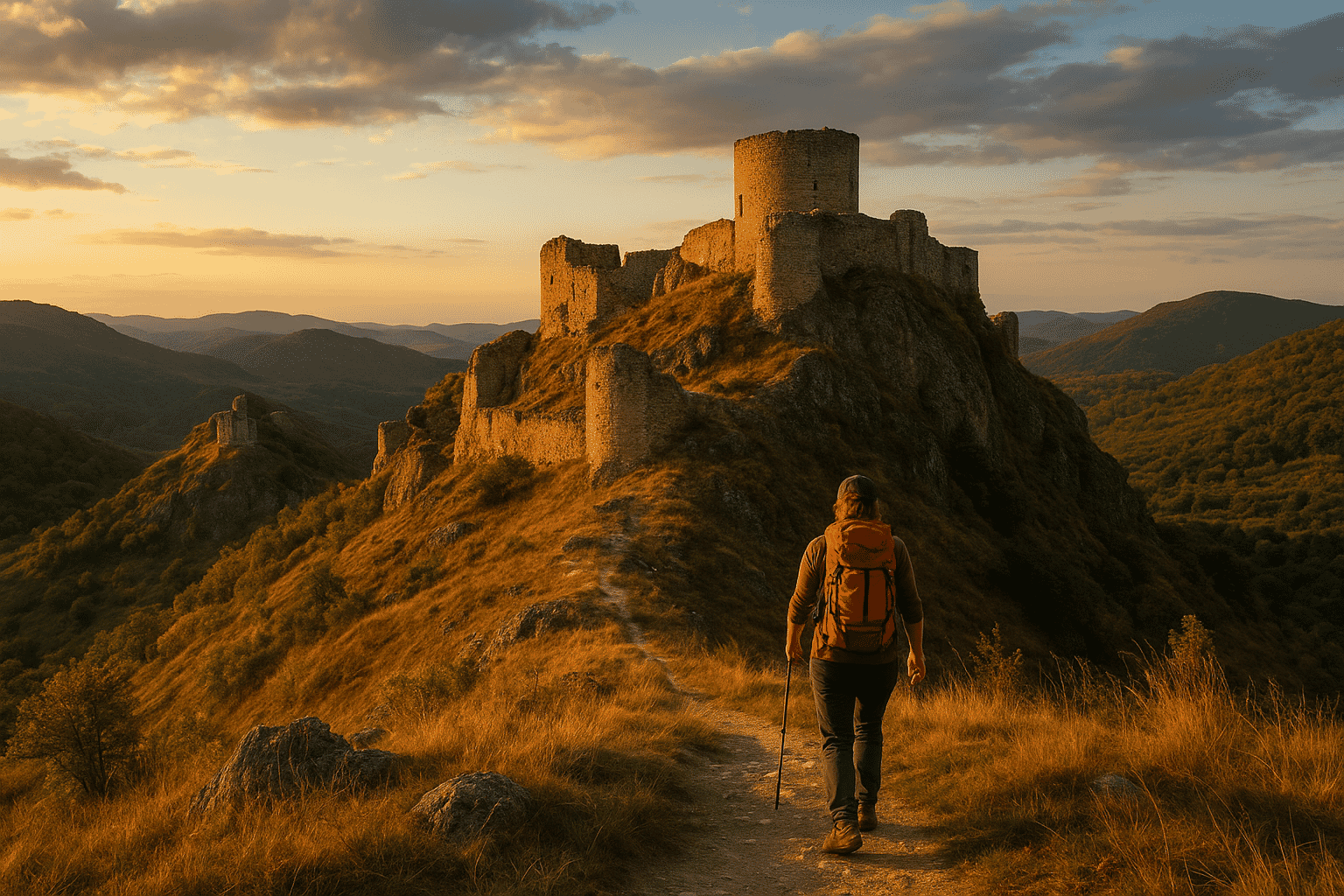
Cetati Dacice: Hiker's Guide to Romania's Ancient Fortresses
Secrets of the Cetati Dacice: A Hiker's Guide to Romania's Ancient Mountain Kingdom
Hidden high in the Carpathian wilderness, the cetati dacice (Dacian fortresses) of the Orăștie Mountains stand as silent witnesses to a lost civilization. Built over 2,000 years ago by the Dacian kingdom, these six fortresses—Sarmizegetusa Regia, Costești-Cetățuie, Costești-Blidaru, Piatra Roșie, Bănița, and Căpâlna—form a UNESCO World Heritage site that rivals any ancient stronghold in Europe. This guide takes you beyond the usual tourist trail, offering practical hiking advice, architectural insights, and a deep dive into the myths that still surround these mountain sanctuaries. Whether you’re a history buff or an off-the-beaten-path adventurer, the cetati dacice promise a journey blending stunning nature with profound cultural resonance.
The Dacian Kingdom and Its Fortresses
The Dacian civilization flourished between the 1st century BC and the 2nd century AD, reaching its zenith under King Decebalus. Facing the expanding Roman Empire, the Dacians built a sophisticated network of fortifications in the Orăștie Mountains, using the rugged terrain for natural defense. The fortresses were not merely military outposts; they served as political, religious, and economic centers. Sarmizegetusa Regia, the capital, housed the sacred precinct and the famous circular sanctuary made of andesite pillars—a celestial calendar aligned with the solstices.
The Romans eventually conquered Dacia in 106 AD after two brutal wars, but the fortresses resisted longer than any other stronghold the empire had faced. Emperor Trajan’s column in Rome even depicts scenes from the siege. After the conquest, the Romans abandoned the mountain fortresses, leaving them to be reclaimed by forest. Rediscovered in the 19th century, they are now protected as UNESCO sites, with ongoing archaeological work revealing new secrets each year.
Exploring the Six Cetati Dacice
Sarmizegetusa Regia: The Sacred Capital
The most important of all the cetati dacice, Sarmizegetusa Regia sits at 1,200 meters (3,937 feet) elevation, surrounded by beech forests. Its centerpiece is the sacred precinct, featuring the unique circular sanctuary of 30 andesite pillars, plus a smaller rectangular sanctuary. The grand limestone altar, used for rituals to the god Zalmoxis, still exudes a tangible aura of spirituality. Visitors can walk the ancient stone-paved roads, see the remnants of the water supply system—clay pipes that carried spring water—and imagine the bustling life of a capital that once controlled a vast kingdom.
How to visit: The fortress is well-signposted from the village of Grădiștea de Munte. A parking lot (opens 8 AM) leads to a 15-minute uphill walk. Hire a local guide at the visitor center (about 50 RON/hour) for deeper insights into the Dacian religion and architecture.
Costești-Cetățuie and Costești-Blidaru: The Twin Defenses
These two fortresses are connected by a 2-hour hiking trail through dense forest. Costești-Cetățuie, the lower one, features a massive rectangular tower and a robust stone wall built in the murus dacicus style—a technique using limestone blocks with wooden beams for earthquake resistance. Higher up, Costești-Blidaru commands sweeping views of the valley below. It boasts four defensive terraces, a covered spring, and a secret tunnel leading to the river—an escape route still visible today. Together, they exemplify Dacian military engineering at its finest.
Tip: Visit both in one morning. Start from the trailhead near Costești village, allow 4–5 hours for the round trip, and bring a flashlight for the tunnel at Blidaru.
Piatra Roșie (Red Rock)
Less visited but equally dramatic, Piatra Roșie sits perched on a red-tinted limestone cliff. Its name comes from the reddish rock. This fortress was a secondary capital, with a large rectangular tower and a unique double-wall system. The climb is steep but short—about 20 minutes from the nearest road—rewarding hikers with dizzying views of the Luncani valley. Unlike the more famous sites, you’ll often have this place to yourself, making it perfect for quiet contemplation of the Dacian legacy.
Access: The road is unpaved; a car with decent clearance is recommended. Alternatively, hike from the village of Luncani (3–4 hours one way).
Bănița and Căpâlna: The Southern Guardians
Bănița fortress is the southernmost of the group, located near the town of Petroșani. It defended the entrance to the Jiu Valley. Its walls are less preserved—many stones were reused by locals in medieval times—but you can still see the foundation of a rectangular tower and a curious trapezoidal enclosure. Căpâlna, on the other hand, is perched on a 700-meter (2,297-foot) hill overlooking the Orăștie River. It was a key storage depot and guard post. Both sites offer more solitude than the northern fortresses and are excellent for combining with a visit to the medieval Corvin Castle in Hunedoara.
The Architectural Genius of the Dacians
Murus Dacicus and Megalithic Walls
The Dacians developed a unique wall-building technique called murus dacicus (Dacian wall). It consisted of two parallel stone faces filled with rubble and tied together with horizontal wooden beams. This design allowed the walls to absorb shock from earthquakes and Roman siege engines. At Sarmizegetusa Regia, the walls reach up to 4 meters (13 feet) thick and 6 meters (20 feet) high. The limestone blocks were quarried from nearby hills and fitted without mortar, showcasing remarkable precision.
The Andesite Sanctuaries
The most mysterious structures are the andesite sanctuaries. At Sarmizegetusa, the circular sanctuary has a diameter of 30 meters (98 feet) and features three concentric rings of stone pillars. Each pillar has a specific angle and height, likely used to track the sun and moon cycles for agricultural and religious calendars. The rectangular sanctuary, nearby, aligns with the summer solstice sunrise—a clear indicator of the Dacians’ advanced astronomical knowledge.
Water Supply and Infrastructure
Dacian engineers built an elaborate water supply system using terracotta pipes buried underground, channeling spring water to the fortresses. At Sarmizegetusa, the water traveled over 3 kilometers (1.9 miles) with a gradient of just 2%, a feat of hydraulics. Remains of these pipes can still be seen alongside the trail. Additionally, the fortresses featured grain silos, workshops, and even furnaces for metalworking, proving they were self-sufficient communities.
Hiking the Fortresses: Practical Tips
The Best Hiking Trails
The most popular route is the Via Transilvanica section that links Sarmizegetusa Regia to Costești-Blidaru. This 10-kilometer (6.2-mile) trail takes about 5 hours one way and passes through spectacular beech forests and open meadows. Other recommended hikes include:
- Sarmizegetusa to Piatra Roșie: 8 km (5 miles) one way, moderate difficulty, 3–4 hours.
- Costești-Cetățuie to Costești-Blidaru: 4 km (2.5 miles), easy, with an optional side trip to the secret tunnel.
- Bănița to Căpâlna: 12 km (7.5 miles), challenging, mostly downhill, best done with a pick-up car.
All trails are marked with yellow and blue signs. A downloadable GPS track from the local tourism office is recommended.
What to Bring and Safety
- Footwear: Sturdy hiking boots are essential—trails are often muddy, excessively rocky, and slippery.
- Water: At least 2 liters per person; there are no mountain springs near the fortresses.
- Sun protection: The exposed limestone reflects UV rays; apply sunscreen and wear a hat.
- Bear spray: The forests are home to brown bears. Make noise while hiking and carry bear spray (available from outdoor shops in Orăștie).
- Emergency supplies: A fully charged phone with offline maps (signal is unreliable), a first-aid kit, and a whistle.
When to go: Late spring (May–June) and early autumn (September–October) offer ideal temperatures (15–25°C) and fewer insects. Summer can be crowded at Sarmizegetusa but quieter at the smaller sites. Winter hiking requires snowshoes or skis and is not recommended without local guidance due to avalanche risks.
Spiritual Landscape: Myths and Legends
The cetati dacice are steeped in legend. Ancient Greek writers claimed the Dacians believed in immortality, and their high priest Zalmoxis dwelled in an underground chamber for three years, resurfacing to teach that death was but a journey to a better world. Some locals still whisper that the god’s spirit lingers in the sacred precinct, especially during the winter solstice when the sun aligns perfectly with the stone circles.
Another enduring myth is the Treasure of Decebalus, a vast hoard of gold and gems that the Dacian king supposedly hid in a cave before the Roman conquest. Many expeditions have tried and failed to find it. Some say the treasure is guarded by spirits, while others believe the Romans themselves looted it and built Trajan’s Column with the proceeds. The mystery adds a layer of intrigue to every sunrise hike.
Additionally, the fortresses are said to be connected by underground tunnels spanning kilometers, used for fast communication between garrisons. Archaeologists have found short corridors at Blidaru and Bănița, but the legendary network remains unproven. Nevertheless, these stories fuel the imagination and make visiting the sites a truly evocative experience.
Planning Your Visit: Practical Guide
How to Get There
The gateway towns are Orăștie (closest for northern fortresses) and Petroșani (for southern fortresses). From Bucharest, take a train to Simeria (about 5 hours) then a local bus or taxi to Orăștie. Once in Orăștie, rent a car (from 50€/day)—public transport to the fortresses is almost nonexistent. Alternatively, join a guided tour that includes transportation from Sibiu or Cluj-Napoca.
Where to Stay
For immersive access, stay at Grădiștea de Munte (cabins and guesthouses starting at 150 RON/night). For more amenities, choose Orăștie (hotels from 200 RON/night) or Cugir (budget options from 100 RON/night). Camping is allowed at designated spots near Costești-Blidaru, but wild camping is discouraged due to bears.
Entrance Fees and Opening Hours
Most fortresses charge a small entrance fee: 5–10 RON per person (about 1–2€). Purchase tickets on-site from the attendant (cash only). Sites are open from 9 AM to 6 PM (until 8 PM in summer). The parking lot at Sarmizegetusa closes at 8 PM—do not stay later or you risk a long hike back.
Local Guides and Tours
Hiring a guide is highly recommended, especially for Sarmizegetusa Regia, where knowledgeable locals explain the astronomical significance and recent digs. The Dacian Pottery Workshop in Grădiștea offers a hands-on experience making replicas, by appointment only (contact through the visitor center). Full-day guided tours of three fortresses cost around 400 RON per person, including transport.
Combining with Other Attractions
Extend your trip with visits to:
- Corvin Castle in Hunedoara (one of the most beautiful Gothic castles in Romania) – 1 hour drive from Orăștie.
- Alba Iulia – a star-shaped fortress with Roman ruins and a medieval citadel.
- Râșnov Fortress – a peasant fortress high in the Carpathians, about 3 hours southeast.
If you’re passionate about hiking, explore more trails in the Bucegi Mountains or the Retezat National Park. For a full Transylvanian experience, check out our guide to Transylvania vacations.
Frequently Asked Questions
How many cetati dacice are there and which is the most impressive?
There are six fortresses in the UNESCO list. Most visitors agree Sarmizegetusa Regia is the most impressive due to its sacred precinct and astronomical sanctuaries. However, Costești-Blidaru offers the best-preserved military architecture and a secret tunnel.
How much time do I need to visit all six fortresses?
Plan a minimum of 3 days: Day 1 for Costești-Cetățuie and Blidaru, Day 2 for Sarmizegetusa and Piatra Roșie, and Day 3 for Bănița and Căpâlna. Hikers can combine some on longer treks.
Is it safe to hike between fortresses?
Generally yes, but trails can be steep and slippery. Always check weather conditions and start early. The risk of encountering bears is real; hike in a group and make noise. Carry a whistle and bear spray.
Can I visit Sarmizegetusa Regia independently or need a guide?
You can visit independently by following marked paths. However, a guide provides context you’d miss—like the meaning of the stone circles—and can show you hidden details like the water pipe remnants.
What is the best base town for exploring the fortresses?
Grădiștea de Munte is the closest village to Sarmizegetusa and Costești, but accommodation is limited. Orăștie is a better base with more hotels, restaurants, and car rental options.
Are the fortresses accessible for people with mobility issues?
Sarmizegetusa has a wide, graded path from the parking lot, making it wheelchair-accessible for the first section. Other fortresses have steep, uneven trails and are not accessible.
What should I bring for a day hike?
Bring sturdy boots, at least 2 liters of water per person, snacks, sun protection, rain gear, a first-aid kit, and a fully charged phone with offline maps. In bear season, carry bear spray.
Are there any entrance fees?
Yes, each fortress charges 5–10 RON (cash only). The total for all six is around 30–50 RON—under 10€. There is no combined ticket.