
Paște in Romania: A Complete Guide to Authentic Easter Traditions
Romanian Easter, known as Paște in Romania, is the most significant religious holiday of the year, blending deep Orthodox spirituality with vibrant folk traditions. Unlike the commercialized Western celebrations, Easter here is a multisensory experience: the smell of incense and lamb roasting, the sight of intricately painted eggs, the sound of "Hristos a înviat!" echoing through candlelit churches. Whether you're a cultural traveler, a food enthusiast, or a spiritual seeker, experiencing Paște in Romania offers an unforgettable glimpse into the soul of the nation. This guide takes you beyond the surface, revealing the sacred rituals, regional variations, and practical tips you need to celebrate like a local.
The Religious Heart of Paște in Romania: Holy Week and the Midnight Resurrection
The spiritual preparation for Paște in Romania begins 40 days before Easter with the Lenten fast (Postul Paștelui). During this period, devout Romanians abstain from meat, dairy, eggs, and oil, eating only plant-based foods. Holy Week (Săptămâna Patimilor) intensifies with daily church services, culminating in the most dramatic moment of the Orthodox year: the midnight Resurrection service (Învierea).
On Saturday night, churches fill to overflowing. At exactly midnight, the priest emerges from the altar with a single flame—the Holy Light (Lumina Sfântă) brought from Jerusalem. He chants "Veniti de luati lumina!" (Come, take the light!), and the congregation lights their candles from his, passing the flame from person to person until the entire church glows. The service then moves outside, where the priest proclaims "Hristos a înviat!" (Christ is risen!), and the crowd responds "Adevărat a înviat!" (Truly He is risen!). This greeting is used for the next 40 days.
After the service, families return home with their lit candles, often making a cross on the door frame with the smoke for blessings. The fast is broken with a light meal of red eggs and pască (cheese cake) before everyone sleeps in the early hours. This moment is the emotional and spiritual peak of Paște in Romania, uniting communities in a shared, ancient tradition.
Traditional Romanian Easter Eggs: Art, Symbolism, and Techniques
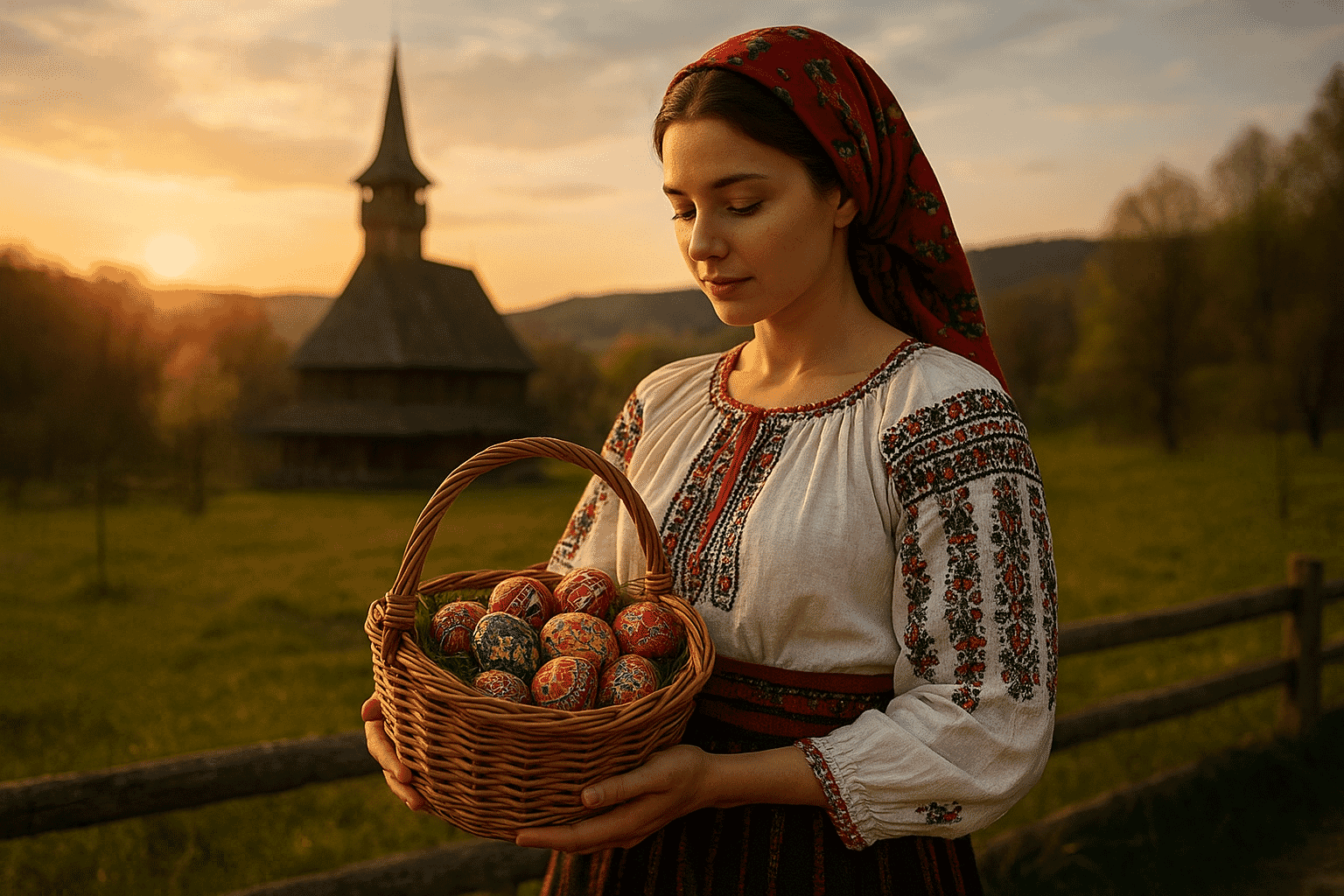
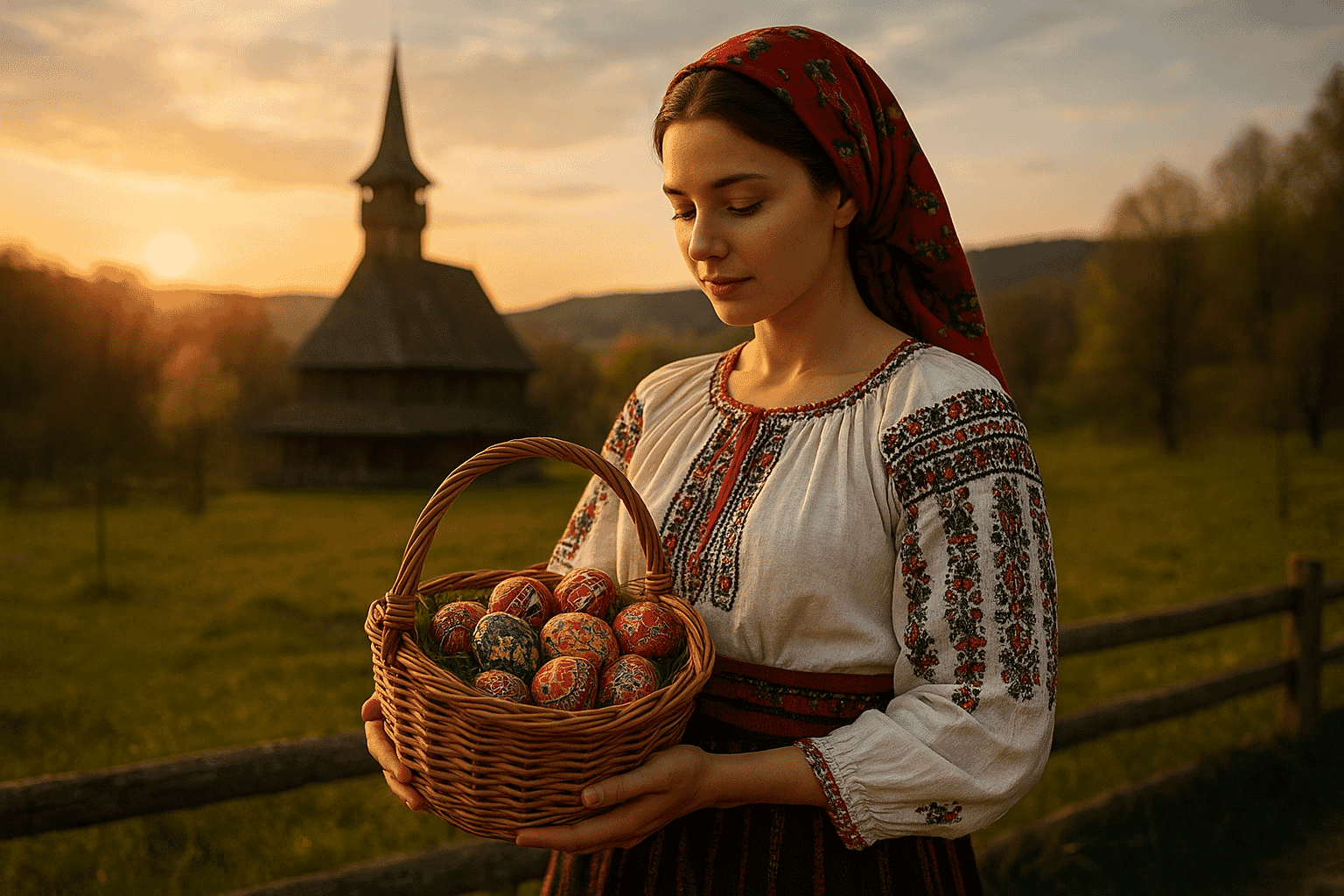
No description of Paște in Romania is complete without the iconic red eggs (ouă roșii). While tourists often associate Easter eggs with chocolate, in Romania the tradition is deeply symbolic and artistic. The red color represents the blood of Christ, and the egg itself symbolizes the tomb from which Christ emerged. But the tradition goes far beyond a single color.
Painted Egg Techniques
- Ouă încondeiate: The most intricate method, using a wax-resist technique. A special tool called a chiseliță (a wooden stick with a metal tip) is used to draw patterns with hot beeswax, then the egg is dipped in natural dye. The wax is removed to reveal white patterns against a colored background. Bucovina is the heart of this art, with motifs like the geometric "spiral" (spirala) and the "tree of life" (copacul vieții).
- Ouă scrobite: Eggs are etched with a sharp tool after being dyed, creating delicate white lines on a dark background.
- Ouă cu foiță: A simpler method where thin, colored foil is cut and glued onto the egg.
The Egg Tapping Game
On Easter Sunday and Monday, families and friends engage in the playful tradition of bătut ouălor (egg tapping). Two people each hold a red egg; one hits the other's egg with the small end. The one whose egg remains intact is considered the winner and is said to have good luck for the year. Children often collect the broken eggs to eat immediately. This custom is a joyful bonding activity and a staple of Paște in Romania.
The Easter Feast: Traditional Foods and Their Meanings
The Easter table in Romania is laden with dishes that have both symbolic and practical significance after the long fast. The meal typically begins after the midnight service, but the main feast occurs on Sunday afternoon. For more on Romanian culinary traditions, check out our guide to traditional Romanian foods.
Must-Have Dishes
- Lamb: Lamb is central, symbolizing Christ as the Lamb of God. The most common preparations are drob de miel (lamb haggis made with organs, herbs, and eggs, baked in the caul fat) and friptură de miel (roasted leg of lamb, often seasoned with garlic and rosemary).
- Red eggs: Served whole, often as a starter. They are also used in games and as decorations.
- Pască: A sweet cheese pie made from cottage cheese or ricotta, sour cream, eggs, and raisins, baked in a rich yeasted dough. It is a symbol of the Holy Spirit and new life.
- Cozonac: A sweet braided bread filled with walnuts, cocoa, or Turkish delight (rahat). It is the traditional Easter bread, requiring hours of kneading and patience.
- Sarmale: Before the fast, sarmale (cabbage rolls) are made with meat; during Lent, they are stuffed with mushrooms or rice. On Easter, the meat version returns with joyful gusto.
Regional Specialties
In Oltenia, you might find leșie (a sour soup with lamb offal), while in Dobrogea, plachie de pește (fish stew) appears on some tables. The diversity of dishes reflects the agricultural traditions of each region.
Regional Customs: From Bucovina's Eggs to Maramureș's Wooden Crosses
Paște in Romania varies dramatically from region to region, each area preserving unique customs.
Bucovina: The Egg-Painting Heartland
Bucovina, famous for its painted monasteries, is also the epicenter of egg-decorating art. In villages like Ciocănești and Vama, women spend Holy Week carefully applying wax patterns to eggs. The motifs are inherited family symbols, often geometric or floral. The finished eggs are so prized that they are not eaten but displayed for weeks. Tourists can visit local workshops to try their hand at this craft.
Maramureș: Wooden Crosses and Pomul de Paște
In Maramureș, a region known for preserving medieval traditions, Easter includes planting elaborately carved wooden crosses in cemeteries and by roadsides. Another unique custom is the pomul de Paște (Easter tree): a branch of a tree (often willow) is cut, decorated with painted eggs, ribbons, and flowers, and placed in the yard or on the table. This tradition is similar to a Christmas tree but for Easter, symbolizing life and resurrection. To explore Maramureș further, see our Maramureș itinerary and picturesque villages guide.
Transylvania: Saxon Influences
The Saxon communities of Transylvania (e.g., Sibiu, Brașov) have blended their Lutheran traditions with Orthodox ones. Here, the Easter tree is particularly popular, and you'll find intricate straw-woven eggs alongside painted ones. In areas like Biertan, the Easter tree is a community project, with everyone contributing eggs. Plan your trip with our Transylvania travel guide.
Oltenia: The Cântecul Iepurașului
In rural Oltenia, children go door-to-door on Easter morning singing the "Cântecul Iepurașului" (bunny song), similar to Halloween but with Easter treats. They receive eggs, sweets, or small coins.
Paștele Blajinilor: The Unique Remembrance of the Dead on Bright Monday
One of the most distinct and moving traditions of Paște in Romania is Paștele Blajinilor (Easter of the Dead), celebrated on the Monday after Easter Sunday. The name „Blajini” refers to the gentle, mythical ancestors who live in a distant land. On this day, families visit cemeteries to share the joy of the Resurrection with their departed loved ones.
At the cemetery, they light candles, bring food (often the same Easter dishes: red eggs, pască, cozonac), and have a small picnic on the graves. They share food with other visitors and the poor. The atmosphere is not somber but joyful, with singing and conversation. This practice blends Orthodox belief in the communion of saints with ancient ancestor veneration customs. It is a powerful example of how Paște in Romania integrates life and death in a cycle of renewal.
In some villages, the priest performs a short service at the cemetery, blessing the graves. This custom is especially poignant in Bucovina and Maramureș, where cemeteries become colorful with flowers and food.
Modern Celebrations vs. Rural Traditions: How Romanians Celebrate Today
While the core religious observances remain strong, Paște in Romania has evolved, especially in urban areas. In cities like Bucharest, many people attend the midnight service but then celebrate with family meals at home or in restaurants. Commercial elements have crept in: chocolate bunnies, Easter egg hunts for children, and themed decorations are common in stores. However, these are often seen as complementary, not replacements for traditions.
Rural vs. Urban Contrasts
- Religious observance: In villages, nearly the entire population attends church during Holy Week; in cities, attendance is lower but still significant for the midnight service.
- Egg decoration: Rural women still paint eggs by hand using traditional methods; urban families often use store-bought dyes or stickers.
- Food: While the classic dishes remain popular, urbanites may order drob and cozonac from bakeries rather than making them from scratch.
- Paștele Blajinilor: This tradition is largely rural; many city dwellers no longer observe it, though some visit cemeteries on different dates.
Despite these differences, the greeting "Hristos a înviat!" still unites all Romanians, and the shared meal remains the centerpiece of the holiday.
Travel Tips for Experiencing an Authentic Paște in Romania
To fully immerse yourself in Paște in Romania, plan ahead and follow these insider tips:
- Check the date: Orthodox Easter uses the Julian calendar, so it can be one to five weeks after the Catholic Easter. It typically falls in April or May. Book accommodations early, especially in villages known for celebrations. Consider staying at a traditional pensiune for an authentic experience.
- Attend the midnight service: Arrive by 11 PM at a local church in a rural area for the most authentic experience. Dress modestly (shoulders and knees covered) and bring a candle (available at church). Be respectful—this is a solemn religious moment.
- Learn the greeting: Practice saying "Hristos a înviat!" and the response "Adevărat a înviat!" to connect with locals.
- Participate in egg tapping: If invited to a family home, join the egg fight. Hold your egg firmly with the small end up, and tap gently. Losing is fine—you eat the broken egg!
- Visit a monastery: Bucovina's monasteries are stunning during Holy Week, with special services. On Easter Monday, processions at Voroneț or Moldovița are unforgettable.
- Buy authentic painted eggs: In Bucovina, buy direct from artisans in Ciocănești. In Maramureș, look for wooden eggs carved with traditional motifs.
- Try cooking workshops: Many guesthouses offer Easter cooking classes where you can learn to make drob, pască, or cozonac.
- Budget: Guesthouses: 30–70 EUR/night. Easter meal in a restaurant: 15–30 EUR. Painted eggs: 2–10 EUR each. Renting a car (30–50 EUR/day) helps you reach remote villages.
By following these tips, you'll experience Paște in Romania not as a tourist, but as a welcomed guest.
FAQ about Paște in Romania
When does Romania celebrate Easter?
Romanian Orthodox Easter follows the Julian calendar, so it usually falls one to five weeks after Western Easter, typically between April and May. The exact date varies each year; check an Orthodox calendar online.
What is the significance of red eggs in Romanian Easter?
Red eggs symbolize the blood of Christ and the empty tomb. The egg itself represents new life and resurrection. The tradition of dyeing eggs red is ancient, predating Christianity but was adopted as a symbol of Christ's sacrifice.
What are the traditional Easter foods in Romania?
Essential dishes include red eggs, drob de miel (lamb haggis), roasted lamb, pască (cheese pie), cozonac (sweet bread), and sarmale (cabbage rolls). These foods break the 40-day Lenten fast.
How do Romanians greet each other at Easter?
The traditional greeting is "Hristos a înviat!" (Christ is risen), and the response is "Adevărat a înviat!" (Truly He is risen). This exchange is used for 40 days after Easter.
What is Paștele Blajinilor?
It is the "Easter of the Dead," celebrated on the Monday after Easter. Families visit cemeteries, light candles, and share Easter foods on graves, joyfully remembering departed loved ones.
Can tourists attend the midnight Easter service?
Yes, tourists are welcome to attend the midnight service at any Orthodox church. Arrive early (around 11 PM), dress modestly, and bring a candle. Observe silence and respect the solemnity of the service.
Where can I see traditional egg painting in Romania?
The best place is Bucovina, especially villages like Ciocănești, Vama, and Moldovița. You can visit artisans' workshops and even try painting yourself. Maramureș also has a strong tradition.
What is the pomul de Paște?
It is an "Easter tree"—a decorated tree branch with painted eggs, ribbons, and flowers. It is particularly popular in Transylvania and Maramureș, placed in gardens or homes.
Do Romanians have an Easter egg hunt?
Traditional egg hunts are not native to Romania, but in recent years, especially in cities and hotels, some have adopted the custom for children. The traditional game is egg tapping (bătut ouălor).
Is it appropriate to give Easter gifts in Romania?
Gift-giving is less commercial than in the West. Small symbolic gifts like chocolate, eggs, or flowers are acceptable if you visit a family. However, the focus is on sharing meals and spiritual celebration.