
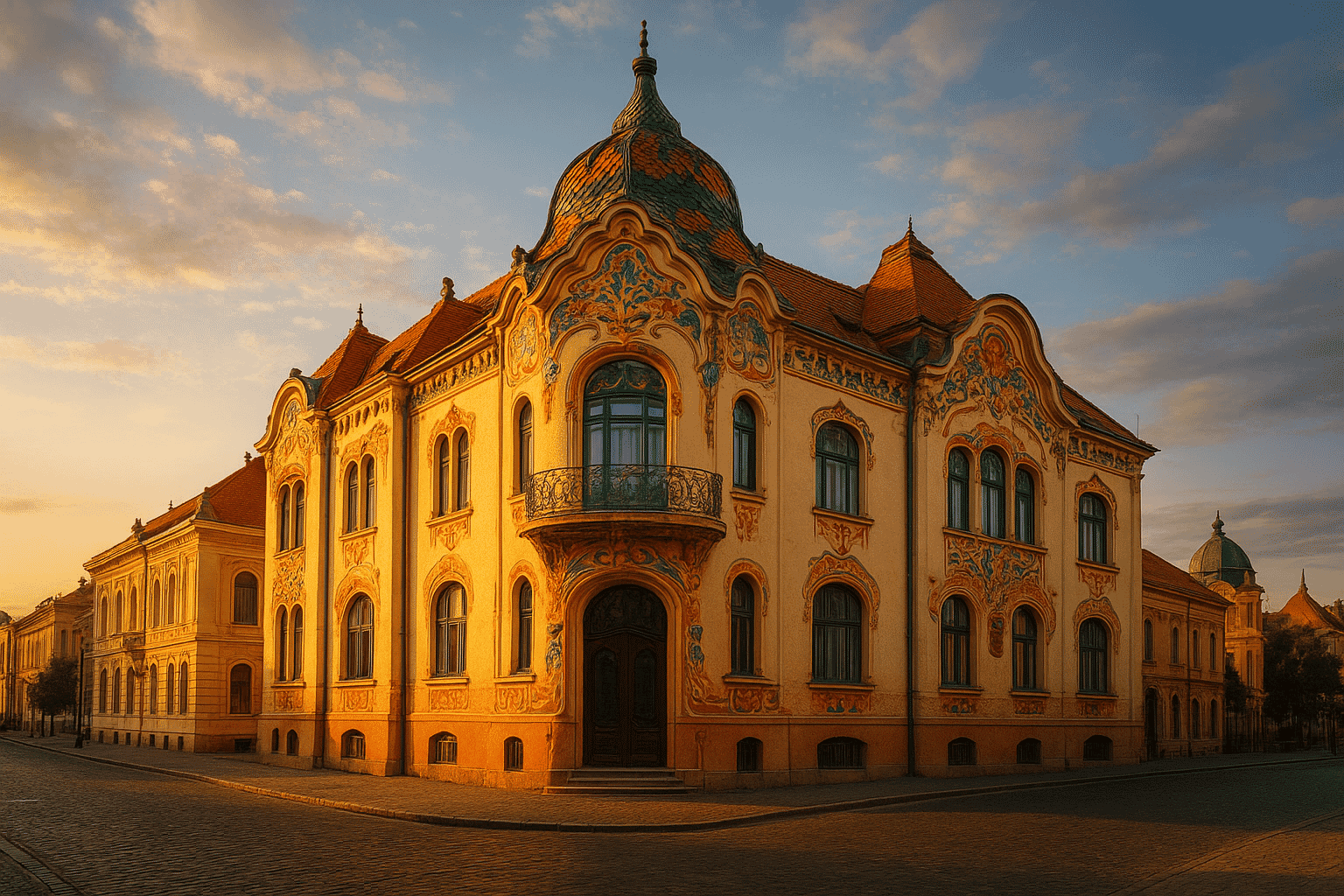
Oradea Art Nouveau: The Ultimate Guide to Romania's Secession Gem
Oradea Art Nouveau: The Ultimate Guide to Romania's Secession Gem
Oradea art nouveau is one of Europe's most underrated architectural treasures, with over 100 listed Secession buildings that rival those in Budapest or Vienna. This guide covers everything from history to top landmarks, self-guided tours, and local culture, ensuring you don't miss a detail.
The History of Oradea Art Nouveau
Oradea's oradea art nouveau flourished between 1900 and 1914 during the Austro-Hungarian Empire. Wealthy merchants commissioned architects like Rimanóczy Kálmán, Komor Marcell, and Jakab Dezső to build palaces, banks, and public buildings in the latest Secession style. The result is a unique blend of Viennese Jugendstil, Hungarian Secession, and local folk motifs, characterized by floral ornamentation, sinuous lines, and vibrant ceramic tiles in green, blue, and yellow.
The Rise and Fall of Oradea’s Secession
The architectural boom was fueled by Oradea’s role as a trading hub. Landmarks like the Black Eagle Palace (1908) and Darvas-La Roche House (1912) exemplify the era's opulence. After World War I, the city became part of Romania and many buildings fell into disrepair under communism. Since the 2000s, restoration efforts have revived Oradea's architectural glory, attracting visitors eager to explore its ornate streets.
Top Art Nouveau Buildings You Must See
The Black Eagle Palace (Palatul Vulturul Negru)
The undisputed icon of oradea art nouveau, completed in 1908 by Rimanóczy Kálmán. Its glass-covered arcade, known as the "Passage," features stained-glass roofing, intricate wrought-iron banisters, and murals depicting eagles and flowers. Free to enter daily from 8 AM to 10 PM.
Darvas-La Roche House (Casa Darvas-La Roche)
Now the Art Nouveau Museum, this 1912 building offers original stained-glass windows, mosaic floors, and period furniture. Entrance is around 15 RON (€3), closed Mondays.
Oradea City Hall (Primăria Oradea)
Built 1902-1903, combining Art Nouveau with eclectic elements. The 45-meter tower offers panoramic views. Guided tours weekdays at 10 AM and 2 PM for 5 RON.
Apollo Palace (Palatul Apollo)
Built in 1914 by Jakab Dezső, featuring ornate ironwork balconies and green ceramic decorations. The entrance and stairwell are accessible to the public, revealing a magnificent stained-glass skylight.
The Moskovits Palace (Palatul Moskovits)
A grand residential building with an asymmetrical façade, green ceramic accents, and a corner tower. Built in 1905 by Komor Marcell.
Other Notable Structures
- The Greek Catholic Bishop's Palace: Partially open to visitors.
- The Stern Palace: Another Rimanóczy masterpiece.
- The Széchenyi Square Ensemble: A cohesive streetscape of Art Nouveau buildings.
For a complete list, use the "Oradea Art Nouveau" app for self-guided tours.
Oradea Art Nouveau vs. Hungarian Secession – What Makes It Unique?
While oradea art nouveau is deeply influenced by the Hungarian Secession, it has distinct characteristics. Local architects incorporated Transylvanian floral patterns, peasant embroidery-inspired ceramics, and Eastern Orthodox elements. The use of colorful glazed tiles is more prolific than in Vienna's Jugendstil, and asymmetry is more pronounced. The arcades, like at the Black Eagle Palace, are a distinctive feature. This unique blend makes Oradea's Secession stand out even among other European Art Nouveau cities.
Self-Guided Walking Tour Through Oradea’s Art Nouveau District
Start at Piața Unirii (Union Square) with the City Hall. Walk down Republicii Street (1.5 km) lined with Secession palaces. Enter the Black Eagle Palace arcade at No. 12, then head to Darvas-La Roche House. Visit Moskovits Palace and the Greek Catholic Bishop's Palace. Finally, explore the City Hall tower.
Practical Tips:
- Wear comfortable shoes; streets are cobbled.
- Best time: late afternoon (4-6 PM) for golden light.
- Use the free map from the tourist office at Piața Unirii.
- Combine with a coffee break at Café Arany János.
Beyond Architecture: Art Nouveau in Cafés, Museums, and Festivals
Oradea art nouveau is a living culture. Café Arany János offers coffee in a full Secession interior. The Art Nouveau Museum at Darvas-La Roche House and the Crisuri County Museum (with an Art Nouveau section) are must-visits. Each June, the "Art Nouveau Days" festival features guided tours and special openings. For local cuisine, check out our guide to traditional Romanian food.
Budget-Friendly Tips
Most attractions are free or under €5. A two-day Art Nouveau tour can cost under €150 including accommodation and meals, making it very affordable.
Photography Tips for Capturing Oradea’s Art Nouveau Details
Use a wide-angle lens for façades and a macro lens for details. Early morning (7-9 AM) reduces crowds; late afternoon provides warm shadows. Shoot the Black Eagle Palace arcade from below with a tripod. For stained glass, shoot from inside with the sun behind you. Best panoramas from City Hall tower.
Frequently Asked Questions About Oradea Art Nouveau
How many Art Nouveau buildings does Oradea have?
Over 100, making it one of the densest concentrations in Europe.
What is the best time to visit?
Spring and autumn, or late June for the Art Nouveau Days festival.
Are there guided tours?
Yes, from the tourist office for about €20-30 per person. Also a free app.
Which buildings are must-sees?
Black Eagle Palace, Darvas-La Roche House, City Hall, Apollo Palace, Moskovits Palace, and Stern Palace.
How does Oradea's Art Nouveau compare?
It combines Hungarian Secession with local folk motifs, featuring more colorful tiles and asymmetrical designs.
Can I visit interiors?
Yes, several buildings are open, including Darvas-La Roche House and City Hall.
Nearby Attractions
Extend your trip with a visit to Transylvania or explore picturesque Maramureș villages.