
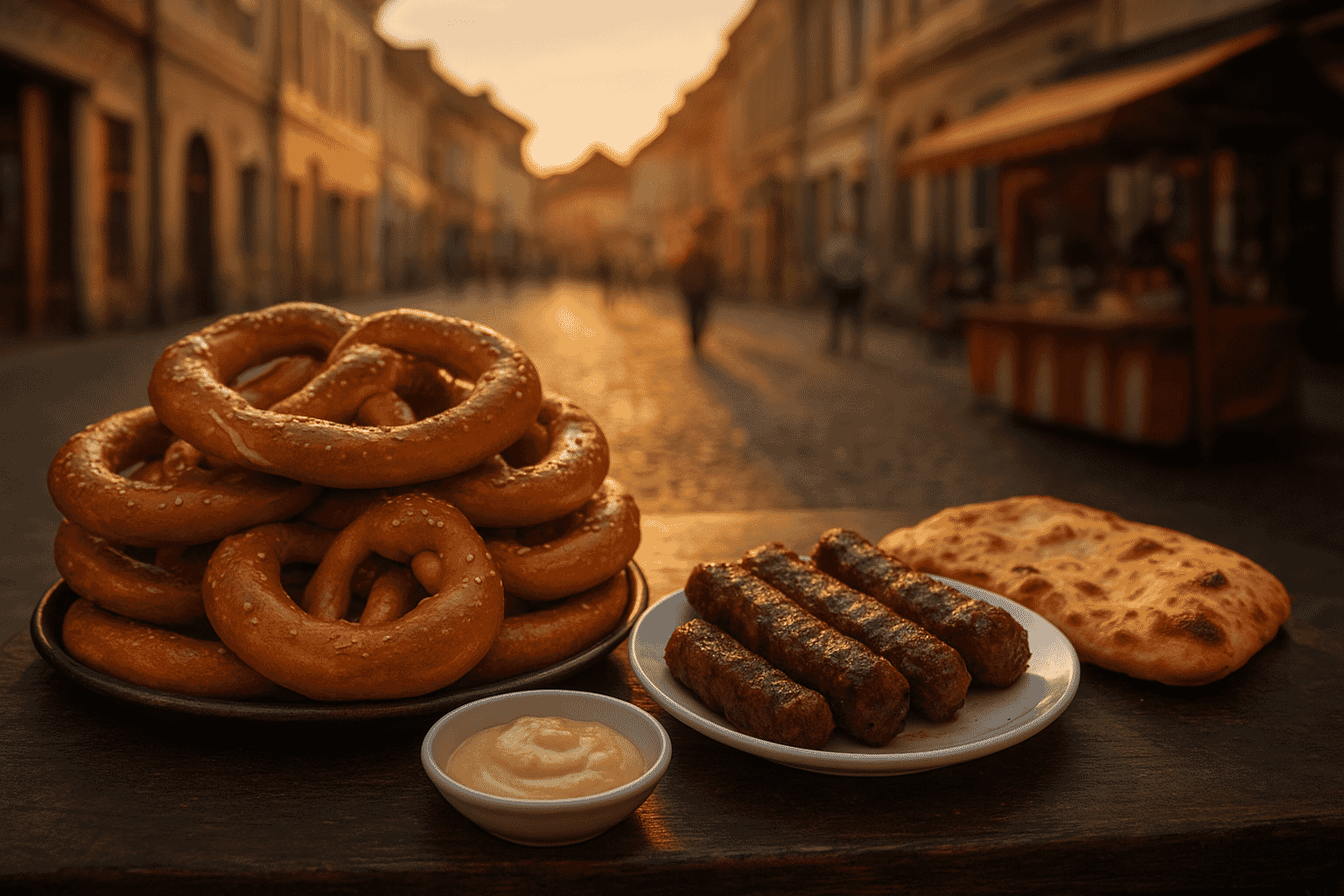
Romanian Street Food: A Local's Guide to Covrigi, Mici, and Hidden Gems
Romanian Street Food: A Local's Guide to Covrigi, Mici, and Hidden Gems
Romanian street food is a delicious portal into the country's culture, history, and everyday life. From the warm, sesame-studded covrigi sold on every corner to the smoky aroma of mici grilling over charcoal, mancare de strada Romania offers hearty, affordable bites that locals have loved for generations. Whether you're exploring Bucharest's bustling Obor Market or wandering the streets of Cluj-Napoca, you'll find a tempting array of traditional snacks that tell a story of resourcefulness, flavor, and community. This guide dives deep into the must-try street foods, where to find them, and how to enjoy them like a true local.
Ce Este Mâncarea de Stradă în România? O Moștenire Culinară
Mancarea de strada Romania is more than just quick eats; it's a reflection of the country's agricultural roots, historical influences, and social traditions. Many of these snacks originated as peasant foods or market-day treats, designed to be portable and satiating. For example, covrigi (pretzels) were baked in communal ovens and sold by vendors, while mici (grilled minced meat rolls) became popular during Communist times as an affordable protein source at public gatherings.
The street food scene varies by region, with Transylvania leaning toward Hungarian influences (think langoși and kürtőskalács), and Moldova offering earthy pies like placinte cu branza. What unites them is the use of simple, fresh ingredients: flour, cheese, sour cream, meats, and seasonal produce. Unlike fine dining, street food is democratic—accessible to everyone, and often cooked right in front of you.
Today, mancarea de strada Romania is enjoyed by people of all ages. It's a common sight to see office workers grabbing a covrig for breakfast, families sharing a plate of mici at a weekend market, or friends munching on langoși at a summer festival. The social aspect is key: eating on the street or in a market square is a communal experience, often accompanied by lively conversation and laughter.
Cele Mai Bune Mâncare de Stradă România: Covrigi, Mici și Alte Gustări
Romania's street food repertoire is surprisingly diverse. Here are the classics you shouldn't miss, along with tips on how to order them.
Covrigi (Romanian Pretzels)
The covrig is the undisputed king of Romanian street snacks. These twisted, golden-brown pretzels are baked fresh throughout the day and sold from small kiosks or metal carts. They're typically topped with sesame seeds (cu susan), poppy seeds (cu mac), or salt. Some bakeries also offer sweet versions filled with jam or chocolate.
Covrigi are incredibly cheap—usually 1-2 lei each (€0.20-0.40)—making them an ideal on-the-go breakfast or afternoon pick-me-up. The best ones are crispy on the outside and soft inside, often still warm. Look for stalls with a constant turnover; at Obor Market in Bucharest, the line at "Covrigăria" is a reliable indicator of quality. For a local twist, ask for a covrig cu branza (with cheese) if available.
Mici (Mititei)
Mici (also called mititei) are small, cylindrical rolls of minced meat—usually a mix of beef, lamb, and pork—flavored with garlic, thyme, and other spices. They're grilled over charcoal until charred and juicy, then served piping hot with a generous smear of mustard and a slice of bread. A portion of 3-5 mici costs around 10-15 lei (€2-3).
To eat like a local, order your mici with mustard (preferably spicy mustard, "mustar iute") and a cold beer or a soda. In Bucharest, head to the famous "Mici la Țară" near the Unirii area or the stalls at Obor Market. Avoid tourist-heavy spots; the best mici are often at simple, high-turnover grills where the grill master knows his craft.
Langoși (Fried Dough with Toppings)
Langoși are deep-fried flatbreads that puff up into a golden disk, then topped with sour cream, grated cheese, garlic, or sometimes dill. They're a staple at fairs, Christmas markets, and street food festivals. The dough is yeasted, giving it a light, airy texture that contrasts nicely with the rich toppings.
A typical langoș costs 5-8 lei (€1-1.60). For the full experience, ask for it "cu smântână și usturoi" (with sour cream and garlic). In Transylvania, especially in Cluj-Napoca's Unirii Square, langoși are a must-try. Some vendors also offer a version with mushrooms or ham, but the classic is unbeatable.
Plăcinte (Savory and Sweet Pies)
Plăcinte are flaky, baked or fried pastries with a variety of fillings. The most common are plăcinte cu brânză (cheese pie), cu cartofi (potato), or cu mere (apple). They're sold in bakeries, market stalls, and even by elderly women at train stations. A single plăcintă costs 3-6 lei (€0.60-1.20).
The best ones are made with a thin, crispy dough and a generous filling. In Moldova, look for "plăcintă cu urdă" (fresh cheese) or "cu dovleac" (pumpkin). For a sweet treat, try the apple version dusted with sugar.
Gogoși (Romanian Doughnuts)
Gogoși are soft, fried doughnuts often filled with jam (usually plum or apricot) or chocolate. They're lighter than American doughnuts and less sweet. Street vendors sell them plain or dusted with powdered sugar. A bag of 2-3 gogoși costs about 5 lei (€1). They're perfect for a quick sugar fix.
Papanași (Fried or Boiled Doughnuts with Sour Cream)
While traditionally a restaurant dessert, papanași are increasingly found at street food festivals. They come in two versions: fried (prăjiți) or boiled (fierți), served with sour cream and sour cherry jam. The texture is like a dense, tangy doughnut. A plate of two papanași costs around 15-20 lei (€3-4) at events.
Unde Găsești Cele Mai Bune Mâncare de Stradă în România
The best street food isn't in fancy restaurants—it's in markets, squares, and at festivals. Here are the top spots:
Bucharest's Obor Market
Obor is the holy grail of Romanian street food. This vast market complex houses dozens of stalls selling everything from mici and covrigi to langoși and grilled pork chops. The mici here are legendary, grilled over charcoal in full view. The market is busiest on weekends, especially Sunday mornings when families come to shop and eat. Arrive before noon to avoid the longest lines. For more budget-friendly eats in the capital, check out our Bucharest on a Budget: Best Cheap Eats and Markets guide.
Cluj-Napoca's Unirii Square
In the heart of Transylvania, Unirii Square is a hub for street food vendors, especially during the annual Street Food Festival (usually in August). You'll find langoși, kürtőskalács (chimney cake), and regional specialties like "papanasi de post" (vegan doughnuts) during Lent. The square also hosts a Christmas market in winter with mulled wine and grilled meats. To explore more of Transylvania's attractions, see our Transylvania Travel Guide.
Romanian Street Food Festivals
Events like the Street Food Festival (held in multiple cities) and the Bucharest Food Festival bring together dozens of vendors under one tent. These are the best opportunities to sample regional variations and modern twists on classics. Ticket prices are usually around 10-20 lei entry, with food sold individually. For a full calendar of festivals, check out our Cultural Calendar of Festivals and Celebrations.
Smaller Towns and Roadside Stalls
Don't overlook rural areas. On major roads, you'll find women selling homemade placinte, covrigi, and gogosi from the back of their cars. These are often the most authentic—made with local cheese and eggs. Just follow the crowd.
Regional Variations and Seasonal Offerings
Transylvanian vs. Moldavian vs. Wallachian
Romanian street food changes as you cross regional borders. In Transylvania, expect Hungarian influences: langoși are ubiquitous, and you'll find kürtőskalács (chimney cake) at markets. Moldavia (the east) is known for its plăcinte with cheese and potatoes, often baked rather than fried. Wallachia (south) is the realm of mici and covrigi, with a heavier emphasis on grilled meats.
Seasonal Specials
Spring and summer bring fresh produce stalls offering juicy plums, apricots, and berries alongside street food. In winter, Christmas markets dominate with roasted chestnuts, mulled wine, and kürtőskalács. During Lent (Postul Paștelui), many vendors offer vegan versions of traditional dishes, like "gogosi de post" made without eggs or dairy.
Street Food vs. Restaurant Dining
Street food is significantly cheaper than restaurants. A full meal from a street stall (mici with bread and mustard) might cost 15 lei (€3), while the same dish in a restaurant could be 30-40 lei (€6-8). But the experience is different: street food is faster, more casual, and often fresher because it's cooked to order. The trade-off is seating—most street food is eaten standing or walking. If you want to sit down, look for markets with benches or nearby parks.
Another difference is variety. Restaurants offer full menus with appetizers, mains, and desserts, while street stalls focus on a few specialties. For a true local experience, combine several street foods: a covrig for breakfast, mici for lunch, and langoși for an afternoon snack.
Tips for Eating Street Food Like a Local
- Carry cash – Most stalls don't accept cards. Small bills (10, 20, 50 lei) are best.
- Follow the queue – A long line means high turnover and fresh food.
- Order with confidence – Learn a few Romanian phrases: "O porție de mici, vă rog" (A portion of mici, please) or "Un covrig cu susan".
- Watch hygiene – Stalls with visible dirt or lack of gloves? Skip them. But don't be put off by a bit of smoke; charcoal grills are traditional.
- Pair with local drinks – Fresh fruit juice (suc de mere, limonada) is common. For adults, try a local beer like Ursus or Timișoreana.
- Best times – Late morning (10am-noon) for fresh covrigi and mici; evenings for langoși and gogosi.
Frequently Asked Questions
What is the most popular street food in Romania?
Covrigi (Romanian pretzels) are the most ubiquitous, sold on nearly every street corner. Mici (mititei) come a close second, especially at markets and festivals.
Is Romanian street food safe to eat?
Yes, as long as you choose busy stalls with high turnover. Avoid vendors with food sitting out for long periods. The use of fresh ingredients and high heat grilling minimizes risks.
What are vegetarian street food options in Romania?
Many options: cheese-filled placinte, vegetarian langoși (with sour cream and cheese), covrigi, and fried gogosi. During Lent, look for vegan gogosi (de post).
How much does street food cost in Romania?
Very affordable: a covrig costs 1-2 lei, a langoș 5-8 lei, a portion of mici 10-15 lei. A full day of street food can cost 20-40 lei (€4-8).
Where can I find the best mici in Bucharest?
Head to Obor Market (Piața Obor) for legendary mici grilled over charcoal. Another spot is the stalls near Unirii Square or at the "Mici la Țară" stand.
Are there any vegan street foods in Romania?
During religious fasts (e.g., Lent), many vendors offer vegan versions of gogosi and sometimes placinte. Look for signs saying "de post". Otherwise, options are limited; be sure to ask about ingredients.
What is the origin of Romanian covrigi?
Covrigi have roots in ancient Roman bread-making, but the modern version was influenced by Ottoman simit and Jewish bakers. They became a staple street snack in the 19th century.
Do street food vendors accept credit cards?
Most do not; cash is king. Some vendors at festivals may accept cards, but it's rare. Always have small bills and coins.