
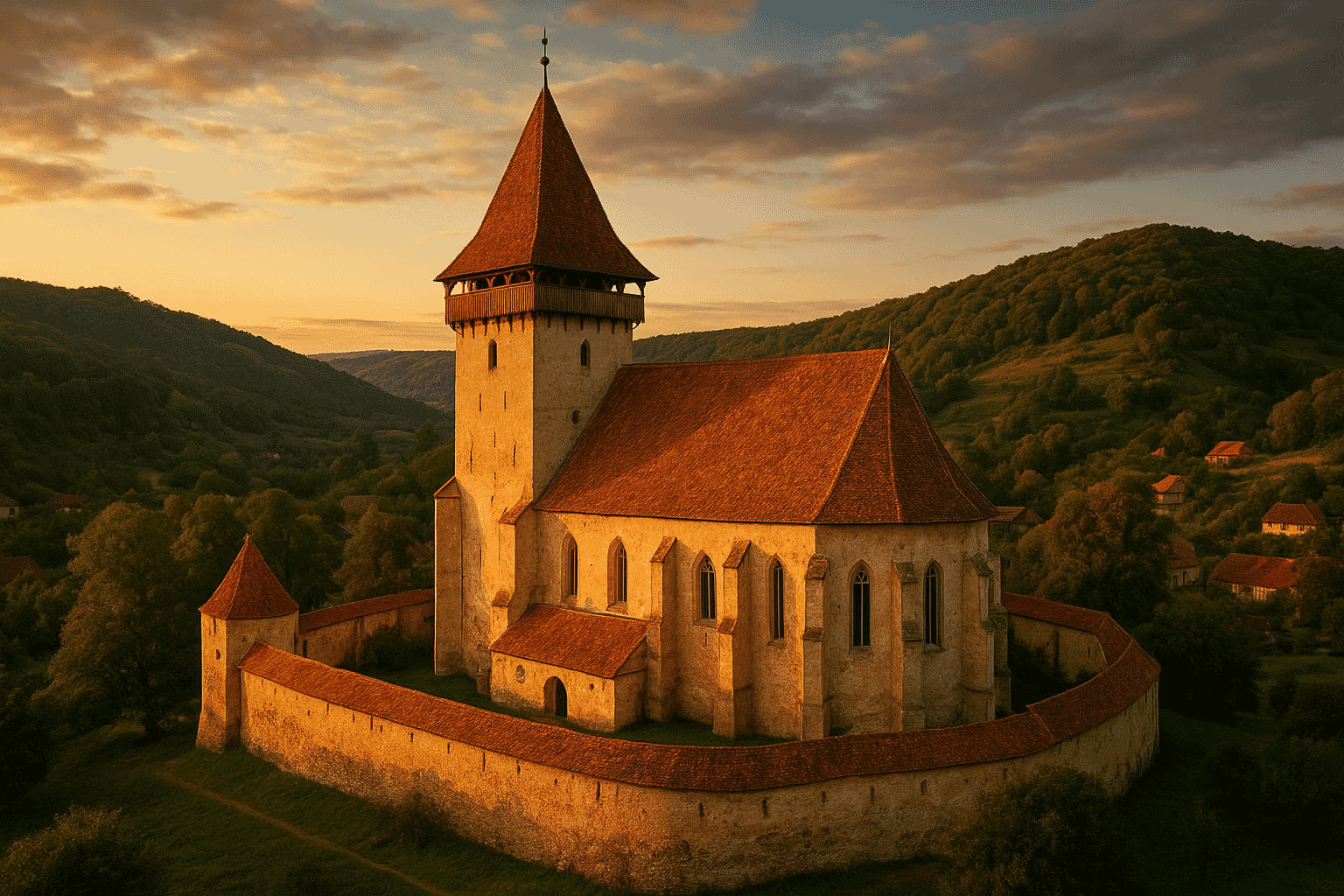
Transylvania’s Fortified Churches: A 4-Day Road Trip Through Saxon Heritage
Deep in the heart of Romania, the biserici fortificate săsești (Saxon fortified churches) stand as living monuments to the resilience and craftsmanship of the Transylvanian Saxons. These UNESCO World Heritage sites, scattered across rolling hills and medieval villages, offer a journey back in time. This 4-day itinerary is designed for cultural travelers who want to explore the most iconic churches while uncovering hidden gems that typical tours miss. From the grandeur of Biertan to the fortress-like Prejmer, you’ll experience a road trip that blends history, architecture, and rural charm.
Understanding the Saxon Fortified Churches
The Transylvanian Saxons, German settlers invited by Hungarian kings in the 12th century, built biserici fortificate săsești as refuges during Ottoman and Tatar invasions. Each church is a self-contained citadel: thick defensive walls, watchtowers, and hidden storage rooms for food and valuables. Over 150 fortified churches survive, and seven are UNESCO-listed. The most famous include Biertan, Prejmer, Viscri, and Valea Viilor. These structures combine Gothic architecture with practical fortifications, often featuring intricate altarpieces and painted ceilings. Unlike typical castles, they were community centers—used for worship, defense, and daily life. Understanding their dual purpose is key to appreciating their unique atmosphere.
Why a Road Trip Itinerary is Best
Public transport in rural Transylvania is sparse and unreliable. A self-drive itinerary gives you the freedom to linger at a church, detour to a vineyard, or discover a village fair. Renting a car in Sibiu or Brașov costs around 150–200 EUR for four days. The roads are generally good, but some stretches are gravel—so consider a small SUV. A guided tour is possible, but it won’t allow the flexibility to explore off-the-beaten-path sites like Alma Vii or Dârjiu. With your own vehicle, you can follow the sun, skip crowds, and stop for homemade palincă (plum brandy) at a farmer’s house. This itinerary assumes you start from Sibiu, a charming medieval city and UNESCO World Heritage site itself.
Day 1: Sibiu to Biertan and Surroundings
Begin your journey in Sibiu, a city of pastel houses and cobblestone squares. Pick up your rental car and head east toward Biertan, the most famous of the biserici fortificate săsești (45-minute drive). Biertan’s church, a UNESCO site, sits atop a hill surrounded by terraced vineyards. Its massive fortified walls enclose a beautiful Gothic church with a remarkable altarpiece and a unique “marriage prison” where quarreling couples were locked up until they reconciled. Allow 1.5–2 hours here. Next, drive 15 minutes to Moșna, a lesser-known church with three concentric walls and a stunning late-Gothic chancel. Lunch in Biertan village—try sarmale (cabbage rolls) at guesthouse terrace. In the afternoon, visit Bazna (20 minutes west), known for its thermal springs and a small fortified church with a fine portal. Overnight in Biertan or Mediaș. Many guesthouses offer traditional Saxon rooms starting at 30 EUR/night.
Day 1 Comparison: Biertan vs Moșna
- Biertan: Grand scale, UNESCO status, tourist facilities, steep entry fee (20 RON).
- Moșna: Smaller, fewer crowds, more intimate atmosphere, 10 RON fee. Perfect for photography.
Day 2: The UNESCO Heartland – Prejmer and Hărman
After breakfast, drive 1.5 hours east to Prejmer, one of the best-preserved fortified churches in Eastern Europe. Prejmer’s church is a true citadel: massive walls, a moat, and a labyrinth of storage rooms over 70 rooms. Climb the tower for panoramic views. The church is often busy, so arrive by 9 AM. Nearby Hărman (10 minutes) is a quieter alternative with a single fortified wall and a beautiful late-Gothic altarpiece. Both are UNESCO-listed. For lunch, head to Brașov (20 minutes from Hărman) for traditional cuisine at a restaurant in the Old Town. Spend the afternoon exploring Brașov’s Black Church and Council Square, then make the short drive to Viscri (1 hour). Viscri’s iconic white-washed church, made famous by Prince Charles, is a photographer’s dream. The village also offers a guesthouse owned by the prince himself—book ahead. Stay overnight in Viscri or nearby Rupea.
Day 3: Off-the-Beaten-Path Gems
Today focuses on hidden treasures. From Viscri, drive 30 minutes to Alma Vii, a tiny fortified church with a working farm and a wine cellar. The keyholder lives next door; ring for entry. Next, head to Câlnic (40 minutes), a UNESCO site that is more of a fortress than a church. Its massive tower and defensive walls are impressive. For lunch, stop at a local guesthouse in Valea Viilor (20 minutes south), where another UNESCO church sits on a hilltop. The village is known for its Saxon hospitality and homemade palincă. Afterward, drive to Mălâncrav (30 minutes), a secluded church with beautiful frescoes and a peaceful graveyard. This area is less visited, offering solitude. Return to Sighișoara for the night—a vibrant medieval town with a citadel and clock tower. Evening: climb the covered stairway for sunset views.
Day 4: Sighișoara and the Mediaș Group
Spend the morning in Sighișoara, the birthplace of Vlad the Impaler. Explore the citadel, visit the Church of the Monastery, and see the unique covered staircase (1642). Then drive 30 minutes to Mediaș, a Saxon town with a fortified church that includes a remarkable stairway and a crypt. Continue to Dârjiu (20 minutes north), a Unitarian church with intricate frescoes and a wooden bell tower. For a final stop, visit Saschiz (15 minutes east), where the church stands atop a hill with views of the surrounding countryside. Both Dârjiu and Saschiz are UNESCO-listed. If time permits, take a detour to the Saschiz Fortress (ruin) for a short hike. End your journey in Brașov or return to Sibiu.
Practical Tips and Planning
- Rent a car: Use international agencies in Sibiu or Brașov. Book early in peak season (June–October).
- Timing: Churches generally open 9 AM–5 PM, with a lunch break (12–2 PM). Many close on Mondays. Check local listings.
- Costs: Entry fees 10–20 RON each. Most accept cash only. An annual multi-site pass (available at some churches) costs 60 RON.
- Accommodation: Traditional guesthouses in Viscri, Biertan, and Sighișoara start at 30 EUR/night. Expect simple amenities but warm hospitality.
- Food: Must-tries include mici (grilled minced meat rolls), ciorbă de burtă (tripe soup), and papanasi (fried cheese doughnuts). In Saxon villages, look for home-cooked meals at guesthouses.
- Language: Romanian is spoken; Hungarian in some areas. English is understood in tourist spots. Learn a few Romanian phrases like “Mulțumesc” (thank you).
Frequently Asked Questions
How many Saxon fortified churches are there in Transylvania?
There are over 150 Saxon fortified churches in Transylvania, of which seven are UNESCO World Heritage sites. They range from small village churches to large fortress complexes.
Which fortified churches are UNESCO-listed?
The seven UNESCO-listed churches are Biertan, Prejmer, Viscri, Valea Viilor, Câlnic, Dârjiu, and Saschiz. Each is exceptionally well-preserved.
How many days do I need for a proper tour?
At least 4–5 days to cover the UNESCO sites and hidden gems. A week allows for a relaxed pace and deeper cultural immersion.
Can I visit without a car?
Public transport is limited. Buses link major towns, but reaching villages like Alma Vii or Mălâncrav is difficult. Guided tours from Sibiu or Brașov are an alternative.
What is the best time of year to go?
Late spring (May–June) and early autumn (September–October) offer mild weather, fewer tourists, and green landscapes. Summer is hot and crowded; winter may close churches.
Are the churches open every day?
Most open Tuesday–Sunday, 9 AM–5 PM, with a lunch closure. Some have shorter hours in winter. Always check ahead or call the local tourist office.